
This guide focuses specifically on sliding glass door energy loss, replacement options, and what South Texas homeowners should know before making a decision.
Patio Door Replacement Definition: Patio door replacement involves removing an outdated or inefficient sliding glass door unit and installing a new frame, glass, and hardware system built to meet current energy performance standards for hot climates.
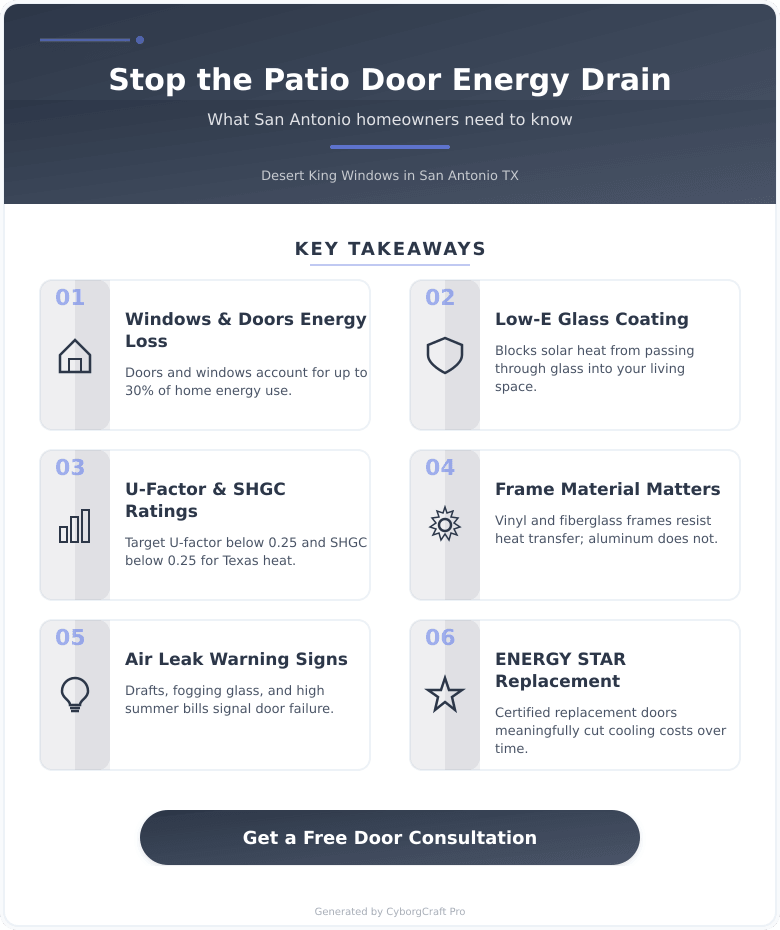
If your home feels warm near the back wall even with the AC running, your sliding glass door is likely part of the problem. According to the U.S. Department of Energy, doors and windows together account for up to 30% of residential heating and cooling energy use. In a Texas summer, that number climbs fast.
Why Sliding Glass Doors Leak So Much Energy in Texas
Standard sliding glass doors were not designed with South Texas summers in mind. Most older units use single-pane or basic dual-pane glass without any low-emissivity (Low-E) coating. That means solar heat passes straight through the glass and radiates into your living space.
U-factor: A measurement of how well a window or door resists heat flow. Lower is better. Many older sliding doors carry U-factors above 0.50, while quality replacement doors achieve 0.25 or below.
Solar Heat Gain Coefficient (SHGC): A rating from 0 to 1 measuring how much solar radiation a glass unit lets in. For hot climates like San Antonio, an SHGC below 0.25 is ideal.
Beyond the glass itself, the frame matters. Aluminum frames – common in older Texas homes – conduct heat aggressively. Vinyl and fiberglass frames interrupt that heat transfer, keeping the perimeter of your door from becoming a radiant heater.
The most common mistake we see is homeowners replacing glass only, without addressing the frame or weatherstripping. Air leaks around the door perimeter can erase any efficiency gains from better glass alone.
Signs Your Patio Door Needs Replacement
- Noticeable heat radiating from the glass or frame on hot days
- Condensation or fogging between glass panes
- Visible daylight around the door edges when it is closed
- Difficulty sliding or latching the door
- Energy bills that spike in June through September without explanation
- Drafts near the door even when it appears fully closed
Replacing an older, inefficient patio door with an ENERGY STAR certified unit can meaningfully reduce energy costs in a hot climate zone. Over time, those savings add up.
Thinking about this for your home? Let’s talk. Contact us at Desert King Windows and we will walk you through your options with no pressure.
Sliding Glass Door vs. French Door: Which Approach Works?
Where sliding glass doors succeed: Space-efficient since panels glide rather than swing, generally lower cost, easier operation for large openings, and wide availability of energy-efficient glass packages.
Where sliding glass doors fail: More weatherstripping contact points mean more potential air leaks over time. The bottom track can accumulate debris and affect sealing. Older aluminum-framed units offer minimal thermal resistance.
Where French doors succeed: Better seal quality at the center meeting stile, premium aesthetic appeal, and easier to achieve tighter air sealing over the full frame perimeter.
Where French doors fail: They require swing clearance inside or outside, increasing cost over comparable sliding units. In tight spaces, they are impractical.
The verdict: For most Texas homes with standard back patio openings, a high-performance sliding glass door with Low-E glass, dual panes, argon gas fill, and a vinyl or fiberglass frame delivers the best energy performance per dollar. French doors work well for premium remodels where aesthetics and space allow.
| Door Type | Cost Range (2025) | U-Factor | Best For |
|---|---|---|---|
| Basic Aluminum Slider | $400 – $700 | 0.55+ | Budget replacement, mild climates |
| Vinyl Low-E Slider | $800 – $1,500 | 0.25 – 0.35 | Texas energy savings, most homes |
| Fiberglass Slider | $1,500 – $3,000 | 0.20 – 0.28 | Premium durability and efficiency |
| French Door (Fiberglass) | $2,000 – $4,500 | 0.22 – 0.30 | Upscale remodels, wide openings |
Your Patio Door Replacement Action Plan
- Step 1 – Assess Current Performance: Check for drafts, fogging, and difficulty operating the door. Note the frame material and approximate age of the unit.
- Step 2 – Measure the Opening: Record the rough opening dimensions before contacting any supplier. Patio doors are available in a variety of sizes to fit common residential openings.
- Step 3 – Choose Glass Package: For San Antonio, prioritize Low-E coating, dual pane with argon fill, and an SHGC below 0.25.
- Step 4 – Select Frame Material: Vinyl is cost-effective and performs well in Texas heat. Fiberglass offers greater durability for high-sun exposures.
- Step 5 – Verify Permits: Local jurisdictions may require a building permit for exterior door replacement. Confirm requirements with your local building authority before installation begins.
- Step 6 – Schedule Installation: Installation timelines vary based on the scope of work. Spring and fall are ideal timing to avoid peak heat or rain.
Texas Tax Credits and Rebates Worth Knowing (2025)
The federal Energy Efficient Home Improvement Credit allows homeowners to claim up to 30% of qualifying door costs, capped at $250 per exterior door or $500 total for doors under current 2025 limits. Doors must meet ENERGY STAR Most Efficient criteria to qualify.
CPS Energy, which serves much of San Antonio, periodically offers rebates for qualifying window and door upgrades. Check their current program availability directly, as rebate pools open and close throughout the year.
Under current Texas law (2025), there is no state income tax, so federal credits carry the full financial benefit without state offset.
Common Mistakes That Cost Homeowners Money
- Choosing the lowest bid without verifying the contractor carries liability insurance and a valid Texas license
- Skipping the permit process, which can create issues at resale
- Selecting a glass package designed for northern climates with a high SHGC, which worsens heat gain
- Ignoring weatherstripping replacement during installation
- Buying a door with a standard aluminum frame expecting energy savings
See how our work stands up – visit our services page for a full overview of what Desert King Windows covers for San Antonio area homeowners.
Key Takeaways for Texas Homeowners in 2025
- Sliding glass doors are a major heat source – older aluminum-framed units with basic glass can spike your cooling load significantly
- Low-E glass and low SHGC ratings matter most – in San Antonio’s climate, solar heat gain is the primary energy problem
- Vinyl and fiberglass frames outperform aluminum – thermal conductivity differences are dramatic in 100-degree heat
- Federal tax credits are active in 2025 – up to 30% back on qualifying door costs if ENERGY STAR certified
- Permits protect your investment – skipping local permit requirements creates risk at resale
Frequently Asked Questions
How much does patio door replacement cost in the San Antonio area?
Most patio door replacements in the San Antonio area range from $800 to $3,000 installed, depending on door size, frame material, and glass package. Budget vinyl sliders with Low-E glass sit at the lower end, while fiberglass units with premium glass packages reach the higher range. Labor typically adds $200 to $500 to material costs.
How long does patio door replacement take?
A standard patio door replacement can often be completed within a day when the opening size is unchanged. Custom sizing or structural modifications to the opening can extend the timeline to two to three days. Most homeowners schedule installations mid-week to avoid weekend weather delays.
Do I need a permit for patio door replacement in Bexar County?
Yes, Bexar County and the City of San Antonio generally require a building permit for exterior door replacement. A licensed contractor will pull the permit as part of the installation process. Working without a permit can complicate home sales and void some manufacturer warranties.
What glass rating should I look for in a Texas patio door?
For South Texas, look for a Solar Heat Gain Coefficient (SHGC) below 0.25 and a U-factor at or below 0.30. These ratings ensure the door blocks radiant solar heat while minimizing overall heat transfer. ENERGY STAR certified doors for the Southern climate zone meet these thresholds automatically.
Can I replace just the glass panel in my sliding door?
Yes, glass-only replacement is possible but often not the most cost-effective path for older doors. If the frame is aluminum, has visible wear, or the weatherstripping is degraded, replacing only the glass leaves major energy loss pathways open. A full unit replacement typically delivers better long-term value.
Does a new patio door increase home value?
Energy-efficient door upgrades generally return 60% to 75% of their cost in resale value according to industry remodeling data. Beyond resale, they reduce monthly utility costs immediately. Buyers in 2025 increasingly look for ENERGY STAR certifications as part of their purchase evaluation.
The Bottom Line for South Texas Homeowners
Your sliding glass door may be the single biggest source of preventable heat gain in your home. The good news is that a quality replacement pays for itself over time through lower energy bills, possible tax credits, and improved daily comfort.
At Desert King Windows in San Antonio TX, we serve homeowners throughout Bexar County, including the South Side, Alamo Heights, Helotes, Converse, and surrounding communities. Our team helps homeowners understand exactly what they are getting before any work begins.
Ready to take the next step? Contact us today for straight answers and real solutions. Summer in San Antonio does not wait, and neither should your home’s comfort.