

Why San Antonio Homeowners Are Replacing Their Windows Earlier Than Expected – And What’s Actually Causing It
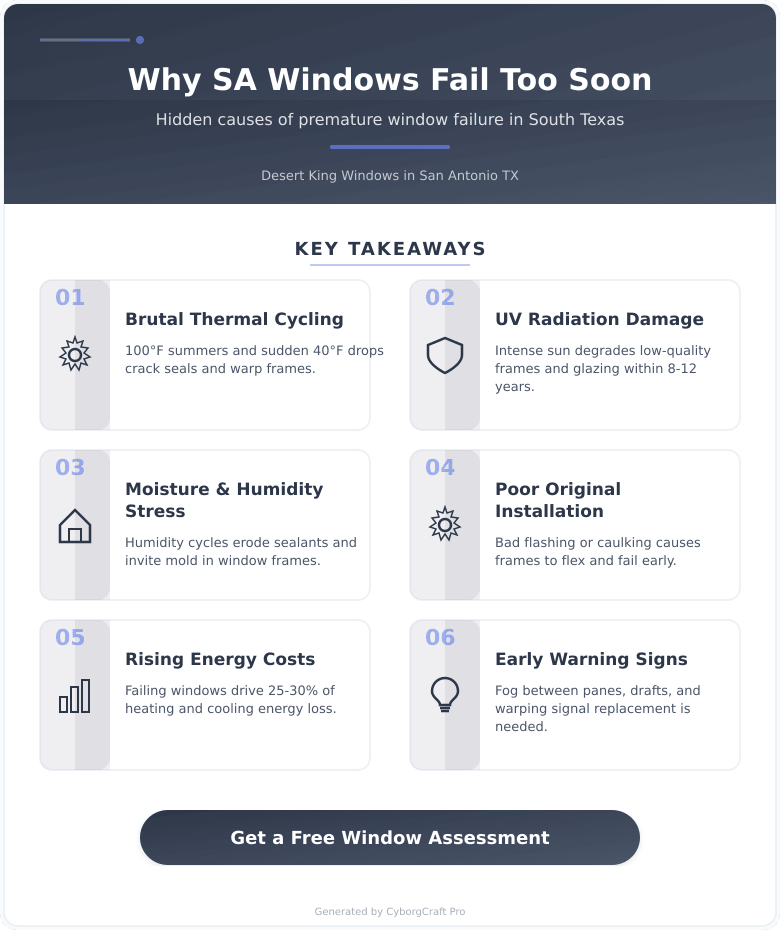
Early window replacement is the process of removing and upgrading windows before their expected lifespan ends, usually triggered by climate stress, installation failures, or material degradation. Catching the warning signs early saves homeowners thousands in energy and structural repair costs.
This guide focuses specifically on the hidden causes behind premature window failure in South Texas homes and what you can do before small problems become expensive ones.
Window Failure Definition: Premature window failure occurs when frames, seals, or glass degrade significantly before the manufacturer’s rated lifespan, typically caused by thermal cycling, moisture intrusion, or poor installation practices.
Here’s what most window guides won’t tell you: the climate around 1890 S Brazos St and across the broader San Antonio metro is genuinely one of the toughest environments for standard window products in the entire country. It’s not just heat. It’s the combination of heat, humidity swings, and rapid temperature drops in winter that breaks windows down faster than most manufacturers predict.
At Desert King Windows in San Antonio TX, we see this pattern repeatedly. Homeowners bought windows expecting 20 or 25 years of service. Ten years in, the seals are failing, the frames are warping, and the energy bills are climbing. And the culprit is almost always one of a handful of the same root causes.
What Early Window Replacement Actually Looks Like
You don’t always get a dramatic failure. Most of the time, it creeps up slowly. According to the U.S. Department of Energy, windows account for 25-30% of residential heating and cooling energy use when seals and glazing degrade. That means a failing window punishes your wallet every month before you ever notice the physical damage.
- Condensation or fog between the glass panes
- Drafts around the frame even when the window is fully closed
- Visible warping, cracking, or discoloration on frames
- Difficulty opening, closing, or locking the window
- Noticeably higher cooling bills without an obvious cause
- Water stains or soft drywall around the window frame
If you’re seeing two or more of those signs, your windows are telling you something. The question is what’s actually behind it.
The Real Causes of Premature Window Failure in South Texas
The most common mistake we see is homeowners (and even some contractors) treating South Texas like a standard climate zone. It isn’t. The thermal cycling here is brutal. Summer temperatures push past 100 degrees for weeks at a time, then a blue norther drops temperatures by 40 degrees in a matter of hours. Standard vinyl expands and contracts with every one of those swings.
Thermal stress: Repeated expansion and contraction weakens frame joints and seal adhesion over years of cycling, causing gaps that allow air and moisture infiltration.
UV exposure: South-facing and west-facing windows absorb intense UV radiation that degrades low-quality frame materials and fades or weakens glazing coatings within 8-12 years.
Moisture and humidity: San Antonio’s humidity, especially after spring and fall rain events, creates condensation cycles that erode sealants and invite mold growth in wood or composite frames.
Poor original installation: Installation quality plays a significant role in window longevity – improper flashing, inadequate caulking, or missing shimming can allow the frame to flex and fail well ahead of schedule.
Thinking about this for your situation? Let’s talk. Contact us and we’ll walk you through your options – no pressure, just straight answers.
Budget Windows vs. Climate-Rated Windows: Which Approach Works?
Where budget windows succeed: Lower upfront cost, widely available, fast installation timelines, adequate performance in mild climates.
Where budget windows fail: Thin vinyl degrades faster under UV stress, lower-quality seals fail within 8-10 years, limited warranty coverage for South Texas conditions.
Where climate-rated windows succeed: Reinforced frames handle thermal cycling without warping, multi-layer low-E coatings manage heat gain and UV exposure, longer warranties with better coverage terms.
Where climate-rated windows fail: Higher upfront cost, fewer contractors trained to install them correctly, longer lead times for some product lines.
The verdict: For South Texas homes, climate-rated windows with reinforced frames and certified low-E glazing outperform budget options over any 15-year window. The higher upfront investment is offset by a longer service life, better energy performance, and avoiding the cost of a second replacement.
| Window Type | Typical Lifespan (TX Climate) | Cost Range (2025) | Best For |
|---|---|---|---|
| Builder-grade vinyl | 8-12 years | Budget tier | Short-term budget priority |
| Mid-grade vinyl w/low-E | 15-20 years | Mid-range tier | Most South Texas homes |
| Premium reinforced vinyl/fiberglass | 20-30 years | $550-$900/window installed | High UV exposure, energy focus |
| Aluminum clad wood | 20-25 years | $700-$1,200/window installed | Historic or custom homes |
Your Window Assessment Action Plan
- Step 1 – Visual Inspection: Walk every window in your home and look for the six warning signs listed above. Note which windows face south or west – those degrade first.
- Step 2 – Performance Check: On a warm afternoon, hold your hand near each frame. Noticeable heat transfer means the seal or glazing is compromised.
- Step 3 – Energy Bill Audit: Compare your summer 2025 cooling bills to two years prior. An unexplained increase in costs can point to window or door seal failure as a contributing factor.
- Step 4 – Frame Tap Test: Lightly tap vinyl or wood frames. A hollow or soft sound in areas that should feel solid signals moisture damage or delamination.
- Step 5 – Get a Professional Assessment: Some problems aren’t visible without a thermal camera or moisture meter. A qualified contractor can confirm what you’re dealing with before you commit to anything.
What to Gather Before Calling a Contractor
- ☐ Window brand and model (check original paperwork or sticker on frame)
- ☐ Approximate year windows were installed
- ☐ Photos of visible damage or condensation
- ☐ Recent energy bills for comparison
- ☐ Any existing warranty documentation
- ☐ HOA guidelines if applicable (some communities restrict exterior changes)
Key Takeaways for South Texas Homeowners in 2025
- Climate is the main driver – South Texas thermal cycling accelerates failure in windows not rated for regional conditions.
- Energy loss comes first – You’ll feel it in your bills before you see physical damage.
- Installation quality matters – A great product installed poorly will still fail early.
- Climate-rated products pay off – Higher upfront cost, but significantly longer service life and better energy performance.
- Act on early signs – Addressing failing windows before full failure avoids secondary damage to walls, framing, and insulation.
Frequently Asked Questions
How long should replacement windows last in South Texas?
Quality replacement windows in South Texas typically last 15-25 years, depending on material and UV exposure. Budget vinyl products often fail in 8-12 years under regional climate stress, while reinforced or fiberglass options hold up significantly longer.
Does homeowners insurance cover premature window failure?
Standard homeowners insurance generally does not cover gradual seal or frame deterioration. Coverage may apply if failure results from a specific covered event like a storm or hail impact. Check your policy or call your insurer for specifics.
How do I know if I need repair or full replacement?
Foggy glass between panes, warped frames, or widespread seal failure usually require full replacement rather than repair. Minor hardware issues or single-point caulk failures may be repairable, but a contractor assessment gives you the clearest answer.
Are there tax credits for window replacement in 2025?
Yes – the federal Energy Efficient Home Improvement Credit offers up to 30% back on qualifying window upgrades, capped at $600 per year (2025 limits). Windows must meet Energy Star Most Efficient criteria to qualify. Consult a tax professional for filing details.
What window brands hold up best in Texas heat?
Brands with heat-specific product lines – including Simonton, Pella, and Andersen – offer options rated for high UV and thermal cycling environments. Look for reinforced frames, multi-chamber construction, and certified low-E coatings designed for hot climates.
How much does window replacement cost in San Antonio in 2025?
Most homeowners in the area pay between $300 and $700 per window installed for mid-to-premium replacement windows in 2025. Full-home projects average $6,000-$15,000 depending on window count, size, and product tier.
Ready to Stop Guessing and Get Real Answers?
If your windows are showing warning signs or your energy bills are climbing without explanation, 2025 is the right time to find out what’s actually going on. Waiting usually means more damage and higher costs down the road.
Visit our services page to see what we offer, or reach out directly. Contact us today for a straightforward assessment – we’ll tell you exactly what we see and what your options are, with no obligation.
We serve homeowners throughout Bexar County, including Alamo Heights, Helotes, Leon Valley, Converse, Schertz, Windcrest, and surrounding communities.
Recent posts
 Vinyl vs. Fiberglass Windows in Arizona: An Honest Desert ComparisonSeptember 28, 2026
 Why Vinyl Windows Are the Smart, Low-Maintenance Choice for Las Vegas HomesSeptember 25, 2026
 Entry-Door Replacement in Phoenix: Curb Appeal That Can Take 115 DegreesSeptember 21, 2026
 The Federal Window Tax Credit Ended – How Las Vegas Homeowners Can Still Save in 2026September 18, 2026