

Still Have Single-Pane Windows in Your Las Vegas Home in 2026? Here Is Exactly What They Are Costing You Every Month on Your Cooling Bill
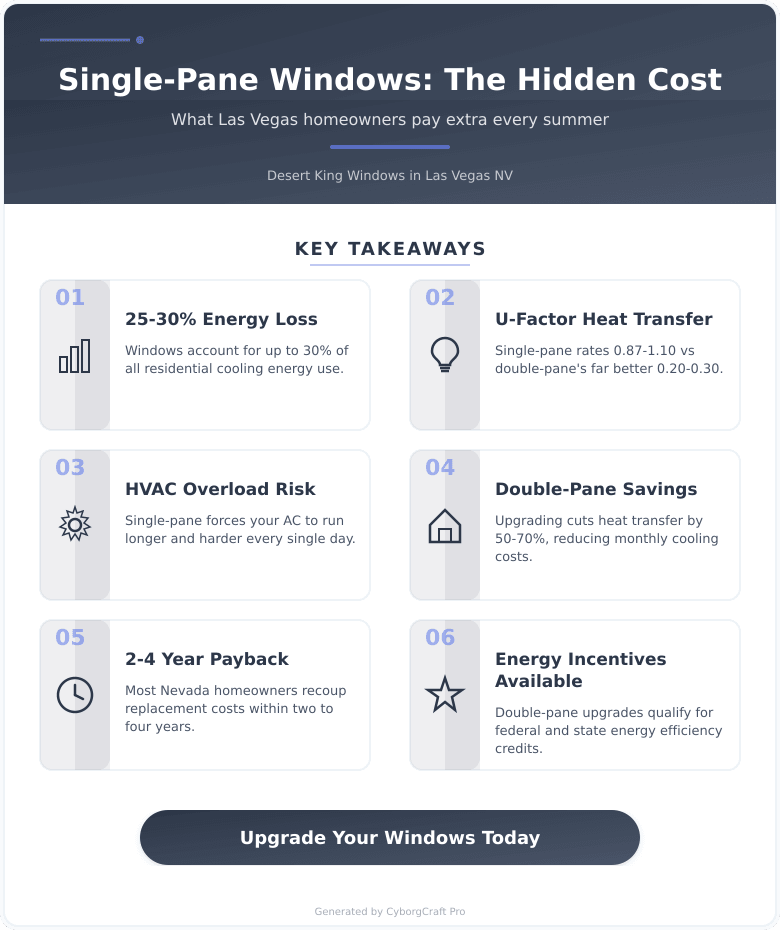
Single-pane windows are glass panels made from a single layer of glass with no insulating barrier, allowing heat to pass through almost freely. In a desert climate where summer temperatures routinely push past 110 degrees Fahrenheit, they are one of the single most expensive features your home can have.
This guide focuses specifically on how single-pane windows affect monthly cooling costs for Nevada homeowners and what replacing them actually looks like in 2025 and 2026.
Single-Pane Window Definition: A single-pane window is a window unit containing one layer of glass with no insulating gas fill, offering minimal resistance to heat transfer and significantly increasing HVAC load in extreme climates.
The most common mistake homeowners make is assuming their air conditioner is the problem when their electricity bill refuses to come down. The pattern is familiar to anyone who has worked in home services in the Las Vegas area long enough: new AC unit, same high bill. Because the real culprit is sitting right there in the wall, letting the desert heat pour straight in.
What Single-Pane Windows Actually Cost You Each Month
According to the U.S. Department of Energy, heat gain and heat loss through windows can account for up to 25–30 percent of residential heating and cooling energy use. In Las Vegas, where cooling is the dominant cost from May through October, that number translates directly to dollars.
Here is a rough picture of what single-pane windows cost the average Nevada homeowner per month during peak cooling season:
- Double-pane low-E windows reduce heat transfer by approximately 50-70% compared to single-pane windows, which means they significantly reduce the cooling load on HVAC systems.
- Las Vegas summer cooling bills for mid-size homes can be substantial, and single-pane windows are a leading contributor to elevated monthly energy costs.
- Upgrading to double-pane windows can meaningfully reduce monthly cooling costs, with the actual amount varying based on home size, window count, and current energy use.
- Over a full cooling season, those savings can represent a significant reduction in preventable energy spending.
U-factor is the rating that measures how quickly a window allows heat to transfer through it. Single-pane windows typically carry a U-factor of 0.87 to 1.10. Double-pane low-E windows used in Nevada homes today commonly rate between 0.20 and 0.30. That difference is not subtle.
Recent data shows that Nevada homeowners who upgraded from single-pane to double-pane energy-efficient windows in 2024 and 2025 reported meaningful drops in monthly utility bills within the first full summer season.
Single-Pane vs Double-Pane Windows: Which Approach Works?
Where single-pane windows succeed: Lower upfront cost, simple repair, suitable for very mild climates or unheated outbuildings.
Where single-pane windows fail: Terrible thermal performance in extreme heat, no sound reduction, no UV protection for furniture and floors, causes HVAC to run longer and harder every single day.
Where double-pane low-E windows succeed: Dramatically reduced heat transfer, blocks UV rays, reduces outside noise, qualifies for federal and state energy incentives, increases home resale value.
Where double-pane windows fail: Higher upfront cost, seal failures on very old units can create fogging between panes (though this is a quality and installation issue, not an inherent flaw).
The verdict: In a Nevada desert climate, single-pane windows have no meaningful advantage. The energy cost penalty they carry every summer makes double-pane replacement a financially sound decision for most homeowners within two to four years.
Window TypeU-FactorAvg. Monthly Cooling Cost ImpactEstimated Cost (2025)Best ForSingle-Pane0.87-1.10High – runs AC constantly$0 upfront / high ongoingMild climates onlyDouble-Pane Standard0.40-0.55Moderate improvement$300-$600 per windowBudget-conscious upgradesDouble-Pane Low-E0.20-0.30Best reduction in desert heat$400-$800 per windowNevada desert homesTriple-Pane0.15-0.25Marginal gain over low-E$700-$1,200 per windowExtreme cold climates
Thinking about this for your situation? Let’s talk. We’ll walk you through your options – no pressure.
Nevada Tax Credits and Rebates for Window Upgrades in 2025
This is where things get genuinely useful. The federal Energy Efficient Home Improvement Credit (25C) currently allows homeowners to claim up to $600 for qualifying exterior windows and skylights in 2025. Windows must meet ENERGY STAR Most Efficient criteria to qualify.
NV Energy also offers rebate programs for qualifying energy-efficient upgrades. Eligibility and amounts vary by program year, so checking directly with NV Energy before your project starts is worth the five minutes it takes.
According to the ENERGY STAR program, windows certified for the Southern climate zone (which includes Nevada) must meet a U-factor of 0.25 or lower and a Solar Heat Gain Coefficient (SHGC) of 0.25 or lower to earn the ENERGY STAR Most Efficient designation.
Your Single-Pane Window Replacement Action Plan
- Step 1 – Audit your windows: Walk your home and count how many windows are single-pane. Look for condensation on the inside of the glass, drafts near frames, or noticeably warm glass during afternoon heat.
- Step 2 – Check your energy bill baseline: Pull your last three NV Energy bills during peak summer months. This becomes your comparison point after replacement.
- Step 3 – Get a professional assessment: A qualified installer will measure your existing frames, check for structural issues, and recommend products rated for Nevada’s climate zone.
- Step 4 – Choose ENERGY STAR certified products: For Nevada, look for low-E coatings, SHGC of 0.25 or lower, and dual-pane construction with argon or krypton gas fill.
- Step 5 – Schedule installation during mild weather: Spring or fall installation avoids the worst of summer heat and ensures proper sealant curing.
- Step 6 – File for your tax credit: Keep all product documentation and receipts. File IRS Form 5695 with your 2025 tax return if your windows were installed in 2025 to claim up to $600.
Preparation checklist before your window replacement consultation:
- ☐ Count total number of windows in your home
- ☐ Note any windows with visible damage, broken seals, or rot
- ☐ Pull recent utility bills for cost comparison
- ☐ Confirm homeowner association rules if applicable
- ☐ Check whether your home is in a historic district requiring specific approvals
Key Takeaways for Nevada Homeowners in 2025
- Single-pane windows cost real money every month – heat gain accounts for up to 30% of your cooling bill
- Double-pane low-E glass is the right choice for Nevada – look for SHGC of 0.25 or lower for the Southern climate zone
- Federal tax credits are available in 2025 – up to $600 for qualifying ENERGY STAR windows
- Most homeowners see payback in 2 to 4 years – depending on window count and current bill size
- Spring is the best time to schedule installation – before peak cooling season begins
At Desert King Windows in Las Vegas NV, we help homeowners throughout North Las Vegas, Henderson, Summerlin, and surrounding communities understand exactly what their windows are costing them and what replacement actually looks like. Our team serves the entire Las Vegas Valley and surrounding Clark County communities. Visit our services page to learn more about our window replacement options.
Frequently Asked Questions
How much can I save monthly by replacing single-pane windows in Nevada?
Most Nevada homeowners see a meaningful reduction in monthly cooling costs during the peak cooling season after replacing single-pane windows with double-pane low-E units. Actual savings depend on your home size, window count, and how hard your AC currently runs to compensate for heat gain.
Do I need a permit to replace windows in Las Vegas?
In most cases, a permit is required for window replacement in Clark County, Nevada if you are changing the size or framing of the opening. Direct like-for-like replacements in the same frame opening often qualify for a simpler process, but confirming with Clark County Building Department before starting is always the right move.
What ENERGY STAR rating do I need for Nevada windows?
For Nevada’s Southern climate zone, ENERGY STAR requires a U-factor of 0.25 or lower and an SHGC of 0.25 or lower for the Most Efficient designation. These specs matter if you want to qualify for the federal 25C tax credit.
How long does window replacement take?
A full home window replacement for an average Las Vegas home typically takes one to three days for the installation phase itself. Lead times for custom-sized windows can add two to six weeks depending on the manufacturer and product line chosen.
Is triple-pane worth it in Las Vegas?
Triple-pane windows offer only marginal performance gains over double-pane low-E glass in a desert climate, making them rarely cost-effective for Nevada homeowners. Triple-pane is engineered for extreme cold climates where insulation from freezing temperatures is the priority, not solar heat gain reduction.
What is the federal tax credit for window replacement in 2025?
The federal Energy Efficient Home Improvement Credit (25C) allows homeowners to claim up to $600 for qualifying exterior windows installed in 2025. Windows must be ENERGY STAR Most Efficient certified, and you file using IRS Form 5695 with your annual return.
Ready to Stop Overpaying on Your Cooling Bill?
Single-pane windows are not just an aesthetic issue. They are a monthly financial drain that compounds every year you leave them in place. With summer temperatures in the Las Vegas Valley expected to remain intense through 2026 and beyond, the cost of waiting adds up fast.
Ready to take the next step? Contact us today for straight answers and a real look at what window replacement would mean for your specific home. We’ll give you honest numbers, not a sales pitch.
About the Author
The Desert King Windows Team, window replacement and home improvement professionals serving North Las Vegas, NV and the surrounding Clark County area. For more information about our approach, visit our homepage or explore our services.
Recent posts
 Vinyl vs. Fiberglass Windows in Arizona: An Honest Desert ComparisonSeptember 28, 2026
 Why Vinyl Windows Are the Smart, Low-Maintenance Choice for Las Vegas HomesSeptember 25, 2026
 Entry-Door Replacement in Phoenix: Curb Appeal That Can Take 115 DegreesSeptember 21, 2026
 The Federal Window Tax Credit Ended – How Las Vegas Homeowners Can Still Save in 2026September 18, 2026