

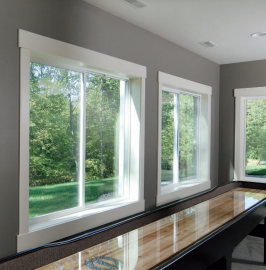
Energy-Efficient Windows for Arizona: What Actually Lowers Your APS or SRP Bill
Energy-efficient windows for Arizona are windows engineered to block solar heat gain while maintaining indoor comfort, reducing how hard your air conditioner works. In a climate where summer cooling places significant demands on your home’s energy use, the right window specifications can meaningfully reduce your monthly utility costs.
This guide focuses specifically on Arizona homeowners who want real, measurable reductions in cooling costs through smarter window choices.
Here’s the honest truth most window shoppers miss: not every window labeled “energy-efficient” will actually lower your bill in Phoenix. The Valley’s heat is a specific problem that demands specific solutions. The most common mistake we see is homeowners choosing windows based on U-factor alone, which measures heat loss in cold climates. In Arizona, that number barely matters. What actually moves the needle is Solar Heat Gain Coefficient, or SHGC.

The One Rating That Actually Matters for Energy-Efficient Windows in Arizona
SHGC (Solar Heat Gain Coefficient): A number between 0 and 1 that measures how much solar radiation a window lets into your home as heat. Lower is better for hot climates.
U-factor: Measures how quickly a window loses heat to the outdoors. Critical in Minnesota. Much less relevant in Phoenix where winters are mild.
According to the U.S. Department of Energy, windows with a low SHGC can significantly reduce the amount of solar heat entering your home compared to standard clear glass. For hot Arizona climates, ENERGY STAR requirements are generally around SHGC ≤ 0.23 to 0.25, while U-factor requirements depend on the current climate-zone specification and are not confirmed here as 0.30.
Homeowners who replace single-pane windows with ENERGY STAR-qualified units in hot climates can expect meaningful reductions in cooling costs, with actual savings varying based on home size, window count, and which windows are replaced.
Double-Pane vs. Triple-Pane: Which Makes Sense Here?
| Feature | Double-Pane | Triple-Pane |
|---|---|---|
| SHGC Performance | 0.22-0.30 (with Low-E) | 0.18-0.25 (with Low-E) |
| U-Factor | 0.25-0.32 | 0.15-0.22 |
| Cost Range (2026) | $300-$700 per window installed | $500-$1,100 per window installed |
| ROI in Hot Climates | Strong – targets primary problem | Moderate – marginal gain in AZ |
| Best For | Most Phoenix homes | Homes with high heating needs too |
Where double-pane succeeds: Lower upfront cost, excellent SHGC performance with proper Low-E coating, proven ROI for Valley homeowners, widely available in Arizona-specific configurations.
Where double-pane falls short: Less sound dampening than triple-pane, marginally higher U-factor for the rare Phoenix winter cold snap.
Where triple-pane succeeds: Better noise reduction, slightly improved U-factor, longer lifespan in some configurations.
Where triple-pane falls short: Significantly higher cost that rarely pays back in Arizona’s mild winters, heavier frames that stress older window openings, limited availability in low-SHGC configurations from some manufacturers.
The verdict: For most Phoenix homeowners paying APS or SRP bills, a quality double-pane window with a Low-E coating and an SHGC of 0.25 or lower is the smarter buy. Triple-pane adds cost without proportional cooling savings in this climate.
Thinking about this for your situation? Let’s talk. We’ll walk you through your options – no pressure. Reach out to the team at Desert King Windows in Phoenix AZ for a free, no-obligation estimate.
Low-E Coatings: The Invisible Layer Doing the Heavy Lifting
Low-emissivity (Low-E) coating is a microscopically thin metallic layer applied to glass. It reflects infrared heat while allowing visible light through. Without it, a double-pane window in Phoenix still lets enormous amounts of solar radiation cook your living room.
Not all Low-E coatings are equal. There are two main types:
- Hard-coat Low-E: Typically applied during glass production, more durable, slightly less effective at blocking solar gain
- Soft-coat Low-E: Typically applied after glass production in a separate deposition process, better solar performance, requires sealing between panes
For Arizona’s climate, soft-coat Low-E with spectrally selective properties gives you the best SHGC reduction without killing natural light. Look for this coating in products from reputable window manufacturers that offer Arizona-specific low-SHGC configurations.
Brand Comparison: Top Windows for Arizona Heat
| Brand | Product Line | SHGC Range | Price Range (2026) | Best For |
|---|---|---|---|---|
| Anlin | Coronado, Malibu | 0.19-0.25 | $400-$850 installed | Arizona-specific performance |
| Milgard | Tuscany, Trinsic | 0.22-0.28 | $350-$800 installed | Value with strong warranty |
| Simonton | StormBreaker Plus | 0.21-0.27 | $320-$750 installed | Budget-conscious buyers |
| Andersen | 400 Series, A-Series | 0.22-0.30 | $500-$1,100 installed | Premium aesthetics |
| Pella | Impervia, 250 Series | 0.20-0.26 | $450-$950 installed | Fiberglass durability |
Arizona Tax Credits and Rebates for Energy-Efficient Windows (2026)
The federal 25C Energy Efficient Home Improvement Credit allows homeowners to claim up to 30% of window costs, capped at $600 per year for windows and skylights (2026 limits). Windows must meet the applicable ENERGY STAR efficiency requirements to qualify, but they do not necessarily need to meet the ENERGY STAR Most Efficient criteria.
Local utility providers may run rebate programs that change periodically. Check directly with your utility for current window rebate availability and any qualifying product requirements. Rebate amounts vary by product and availability.
Check with a qualified tax professional or your state revenue department for the most current information on any available state-level incentives for window replacements in Arizona.
Your Energy-Efficient Window Action Plan
- Step 1 – Audit your current windows: Look for condensation between panes, drafts, visible UV fading on furniture, and high summer bills. These are signs your windows are underperforming.
- Step 2 – Identify priority windows: West- and south-facing windows take the most direct solar punishment in Phoenix. Start there for maximum bill impact.
- Step 3 – Confirm SHGC specs: Ask any contractor for the NFRC label showing SHGC of 0.25 or below and U-factor of 0.30 or below for Arizona climate zones.
- Step 4 – Check ENERGY STAR eligibility: Verify the product qualifies for the federal 25C credit before purchase.
- Step 5 – Get permits pulled: Window replacement in Phoenix typically requires a building permit. Confirm your contractor handles this – unlicensed installs can void warranties and complicate home sales.
- Step 6 – Schedule off-peak installation: Spring and fall are ideal. Avoid mid-summer installs when heat makes proper sealing harder and scheduling is tighter.
Common Mistakes That Kill Your ROI
- Choosing windows based on U-factor alone – irrelevant for Arizona cooling bills
- Skipping the NFRC label verification and trusting marketing claims instead
- Replacing interior-facing windows before the worst sun-exposed ones
- Using a contractor who doesn’t pull permits, which can void manufacturer warranties
- Ignoring frame material – vinyl frames outperform aluminum in heat transfer resistance for Arizona conditions
According to the ENERGY STAR program, windows bearing the ENERGY STAR Most Efficient label for the southern climate zone deliver the best verified performance for states like Arizona.
Key Takeaways for Arizona Homeowners in 2026
- SHGC is the number that matters most – target 0.25 or below for real cooling bill relief
- Double-pane with Low-E outperforms triple-pane for ROI in Arizona’s hot-dry climate
- West and south-facing windows deliver the fastest payback – prioritize those first
- Federal tax credit covers up to 30% of costs up to $600 for qualifying windows in 2026
- Always verify the NFRC label – marketing language doesn’t replace certified performance data
Frequently Asked Questions
How much can energy-efficient windows actually lower my APS or SRP bill?
Homeowners in hot climates can see meaningful annual cooling savings after replacing single-pane windows with ENERGY STAR-qualified units. Actual savings depend on how many windows you replace, your home’s size, and which windows face west or south.
What SHGC rating do I need for Phoenix windows?
For Phoenix and the surrounding Valley, look for an SHGC of 0.25 or lower. ENERGY STAR’s hot-dry climate zone requirement confirms this threshold as the standard for meaningful solar heat reduction.
Do I need a permit to replace windows in Phoenix?
Yes, most window replacements in Phoenix require a building permit from the City of Phoenix Development Services Department. A licensed contractor should pull this permit – installs done without one can affect your homeowner’s insurance and complicate future home sales.
Is the federal window tax credit still available in 2026?
Yes, the federal 25C Energy Efficient Home Improvement Credit remains available in 2026, covering up to 30% of window costs capped at $600 per year. Windows must meet the applicable ENERGY STAR efficiency requirements for the southern climate zone to qualify.
How long does window replacement take?
A standard whole-home window replacement for an average Phoenix home typically takes one to three days for installation. Lead times for ordering windows can run two to six weeks depending on manufacturer and product line.
What frame material works best for Arizona heat?
Vinyl frames are the most practical choice for Phoenix homes because they don’t conduct heat the way aluminum frames do. Fiberglass is also strong in extreme heat and holds its shape well, but costs more than vinyl for comparable performance.
Can I replace windows myself to save money?
DIY window installation is technically possible but risky in Arizona without proper permitting and sealing techniques. Improper installation voids most manufacturer warranties and can allow water infiltration during monsoon season, creating far costlier problems than the labor savings justify.
Your Next Step
If your APS or SRP bills feel out of control every summer, the windows in your home may be working against you. The right specifications – low SHGC, quality Low-E coating, proper frame material – make a real difference you’ll feel and see on your utility statements.
Desert King Windows serves homeowners throughout Phoenix and surrounding communities including Tempe, Chandler, Mesa, Scottsdale, Glendale, Peoria, and Gilbert. We’re located at 2615 S 21st St, Phoenix, AZ 85034.
Ready to take the next step? Contact us today for straight answers and real solutions. We’ll walk through your home’s specific situation, show you the NFRC labels on every product we recommend, and give you a clear picture of what your investment will actually return. No inflated promises – just honest guidance on what works in this heat.
Recent posts
 Windows for West-Facing Phoenix Homes: Beating the 115-Degree Afternoon Wall of HeatOctober 19, 2026
 5 Signs Your Old Las Vegas Windows Are Failing – and Driving Up Your NV Energy BillOctober 16, 2026
 Replacing Old Single-Pane Windows in the Valley: The Comfort and Savings You’ll FeelOctober 12, 2026
 Double-Pane vs. Triple-Pane Windows in Las Vegas: Which Is Actually Worth It in the Desert?October 2, 2026