

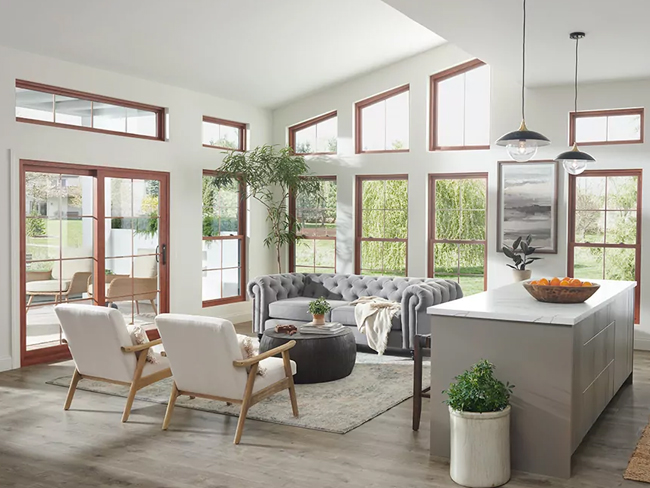
5 Signs Your Old Las Vegas Windows Are Failing – and Driving Up Your NV Energy Bill
Failing windows are window units that have lost their ability to seal, insulate, or operate correctly, letting conditioned air escape and outside heat pour in. In the Mojave Desert climate, that failure translates directly to higher NV Energy bills every single month.
This guide focuses specifically on Nevada homeowners who suspect their windows are costing them money and want clear, actionable answers about replacement options in 2026.
Failing Windows Definition: A window that no longer performs its intended thermal, structural, or sealing function, causing measurable energy loss, moisture intrusion, or security risk for the homeowner.
The most common mistake we see is homeowners blaming their HVAC system for high cooling bills when the real culprit is sitting right in the wall. Single-pane glass, degraded seals, and warped frames quietly drain energy 24 hours a day. Recognizing the signs early can save you hundreds of dollars before summer peak rates hit.

Sign 1 – Your Utility Bills Keep Climbing Without Explanation
If your NV Energy bill has been creeping up year over year and your usage habits have not changed, your windows deserve serious scrutiny. Drafty windows and doors are a well-documented source of residential energy loss, and in Las Vegas, where summer temperatures routinely exceed 110 degrees Fahrenheit, that impact can push your cooling costs even higher.
Nevada homeowners with single-pane windows can pay meaningfully more on cooling compared to homes with energy-efficient double-pane units rated for desert heat.
Look at your NV Energy bills from the past 12 months and compare them month to month. A steady upward trend without a rate change is a red flag worth investigating.
Sign 2 – You Can Feel Heat Radiating Through the Glass
Stand near your windows on a July afternoon. If you feel warmth radiating off the glass from three feet away, your windows are acting more like a heat collector than a barrier. Old single-pane windows have a U-factor (a measure of heat transfer rate) of around 1.0 or higher. Modern low-E double-pane windows designed for Nevada’s climate offer significantly improved U-factor performance compared to older single-pane units.
U-factor: A rating that measures how well a window prevents heat from escaping or entering. Lower numbers mean better insulation performance.
SHGC (Solar Heat Gain Coefficient): A rating that measures how much solar heat a window allows inside. For Las Vegas, a lower SHGC is recommended to reduce cooling loads in the hot desert climate.
Thinking about whether this applies to your home? Let’s talk. We’ll walk you through your options with no pressure and no guesswork. Reach out to Desert King Windows in Las Vegas NV for a free on-site assessment.
Sign 3 – Condensation or Fogging Between the Panes
Foggy glass between the panes is one of the clearest signs a window has failed. It means the inert gas (usually argon) that provides insulation has escaped and moisture has infiltrated the sealed unit. Once that seal breaks, the insulating performance drops significantly and cannot be restored with cleaning or patching.
The fix is glass unit replacement or full window replacement, depending on the frame condition. Ignoring it means paying to cool a home that is actively exchanging heat with the outside.
Sign 4 – Visible Frame Damage, Warping, or Difficulty Operating
Wood frames rot. Vinyl frames warp under extreme heat. Aluminum frames conduct heat readily and create thermal bridging that undermines any glass efficiency. If your windows stick, refuse to latch securely, or show visible cracks and gaps around the frame, they are no longer air-tight.
Even a small gap around a window frame can allow significant conditioned air to escape. Multiply that across 10 or 15 windows and the energy loss becomes significant fast.
Sign 5 – Excessive Dust and Outdoor Noise Coming Inside
Las Vegas dust storms are a real issue, and a well-sealed window keeps that fine desert particulate outside where it belongs. If you notice dust accumulating on interior sills faster than normal, or if street noise is much louder than it used to be, your seals have degraded. Sound transmission and air infiltration follow the same pathways, so noisy windows are almost always leaky windows too.
Repair vs. Replacement: Which Approach Works?
Where repair succeeds: Minor weatherstripping replacement, hardware fixes, and re-caulking can help extend window life at relatively low cost. Frames in good structural condition may only need glass unit replacement.
Where repair fails: Broken seals cannot be permanently fixed. Warped frames cause ongoing air infiltration. Single-pane glass cannot be upgraded to double-pane without full replacement.
Where full replacement succeeds: New windows deliver improved SHGC and U-factor performance suited to Nevada’s desert climate. They restore air sealing, improve security, and may qualify for available energy efficiency incentive programs.
Where full replacement fails: Higher upfront cost and longer lead times. Not always necessary if only one or two windows show problems.
The verdict: When multiple windows show signs of failure, full replacement is often more cost-effective over the long term than repeated repairs. If only one window is fogged or damaged, targeted glass replacement may suffice.
| Option | Cost Range (2026) | Lifespan Added | Best For |
|---|---|---|---|
| Weatherstrip / Caulk Repair | $50 – $200 per window | 2-5 years | Minor air leaks, sound frames |
| Glass Unit Replacement | Varies by unit and installer | Varies | Fogged IGU, intact frames |
| Full Window Replacement | Varies by window size and materials | Many years with quality products | Multiple failing windows, old frames |
Thinking about this for your situation? Let’s talk. We’ll walk you through your options with no pressure. Contact the team at Desert King Windows in Las Vegas NV.
Nevada Tax Credits and Rebates Available in 2026
The federal Energy Efficient Home Improvement Credit (IRS Section 25C) allows Nevada homeowners to claim up to 30% of qualifying window replacement costs, capped at $600 per year for windows (2026 limits). To qualify, windows must meet ENERGY STAR Most Efficient criteria, which typically means a U-factor of 0.27 or lower and a SHGC suited to Nevada’s hot-dry climate zone.
NV Energy also runs periodic rebate programs for qualifying energy-efficient upgrades. Check the U.S. Department of Energy’s incentives page for the latest federal and utility-level programs available in Nevada this year.
Your Window Replacement Action Plan
- Step 1 – Audit your windows: Walk each room and check for condensation, drafts, warping, and difficulty operating. Note problem units.
- Step 2 – Pull your NV Energy bills: Compare the last 24 months for unexplained cost increases tied to cooling season.
- Step 3 – Request a free assessment: A professional can measure current U-factor performance and identify which windows are failing versus which can be repaired.
- Step 4 – Confirm tax credit eligibility: Ask your contractor to confirm the selected window products meet IRS Section 25C qualifications before purchase.
- Step 5 – Schedule installation before peak season: Nevada summers hit hard. Replacing windows before June means you capture savings during the highest-cost cooling months.
- ☐ Document condensation or fogging in each window
- ☐ Check frames for warping, cracking, or gaps
- ☐ Test latches and operation on every unit
- ☐ Review 12-24 months of NV Energy bills
- ☐ Confirm ENERGY STAR ratings before purchasing replacement windows
Key Takeaways for Nevada Homeowners in 2026
- Energy loss is measurable – old windows contribute meaningfully to your cooling load in desert climates.
- Fogged glass means a broken seal – no cleaning or patch fixes it permanently.
- SHGC matters most in Las Vegas – look for a lower SHGC rating to cut solar heat gain.
- Federal tax credits are active in 2026 – up to 30% back on qualifying window costs.
- Repair vs. replace – if multiple windows are failing, full replacement often wins long-term.
Frequently Asked Questions
How much does window replacement cost in North Las Vegas in 2026?
Full window replacement in the Las Vegas area generally runs $400-$1,200 per window installed, depending on size, frame material, and glass package. Homes with many windows often see per-unit costs come down with volume pricing from local contractors.
Do I need a permit to replace windows in Nevada?
Most like-for-like window replacements in Nevada do not require a permit, but structural changes or size modifications typically do. Always confirm with your local Clark County or North Las Vegas building department before work begins.
How do I know if my window seals are broken?
Fogging, cloudiness, or moisture between the glass panes is the clearest sign of a broken insulated glass unit (IGU) seal. Once the argon gas escapes and moisture enters, the unit’s insulating capacity is permanently reduced.
What window rating should I look for in Las Vegas?
For Nevada’s hot-dry climate, look for a low Solar Heat Gain Coefficient (SHGC) and a U-factor of 0.27 or lower. ENERGY STAR certifies windows meeting these thresholds for the Southwest climate zone.
Can new windows really lower my NV Energy bill?
Yes – homes upgrading from single-pane to energy-efficient double-pane windows typically see cooling cost reductions of 15-25% during peak summer months. Actual savings depend on home size, window count, and existing insulation.
How long does window installation take?
A standard whole-home window replacement for an average Las Vegas home (10-15 windows) typically takes one to two days for a professional crew. Larger jobs or custom sizing may extend the timeline slightly.
Ready to Stop Paying for Failing Windows?
Your windows should be working for you, not against you. Every month you wait with failing seals and old glass is another month of excess cooling costs on your NV Energy bill. Summer 2026 is already shaping up to be another record heat season in Nevada, and the time to act is before temperatures peak.
Ready to take the next step? Contact the team at Desert King Windows in Las Vegas NV today for straight answers and a free on-site estimate. We serve homeowners throughout the Las Vegas Valley, including North Las Vegas, Henderson, Summerlin, Spring Valley, and surrounding communities. No pressure, no guesswork – just honest guidance on what your home actually needs.
Recent posts
 Replacing Old Single-Pane Windows in the Valley: The Comfort and Savings You’ll FeelOctober 12, 2026
 Energy-Efficient Windows for Arizona: What Actually Lowers Your APS or SRP BillOctober 5, 2026
 Double-Pane vs. Triple-Pane Windows in Las Vegas: Which Is Actually Worth It in the Desert?October 2, 2026
 Vinyl vs. Fiberglass Windows in Arizona: An Honest Desert ComparisonSeptember 28, 2026